




A European manufacturer of organic fertilizers was expanding into the United States for the first time.
Their customers were farms across the U.S. The buyers needed product delivered reliably and on time, often within tight seasonal windows.
The manufacturer had product ready to ship, but no U.S. infrastructure to support U.S. sales.
No warehouse. No logistics team. No system to store and ship product once it arrived.
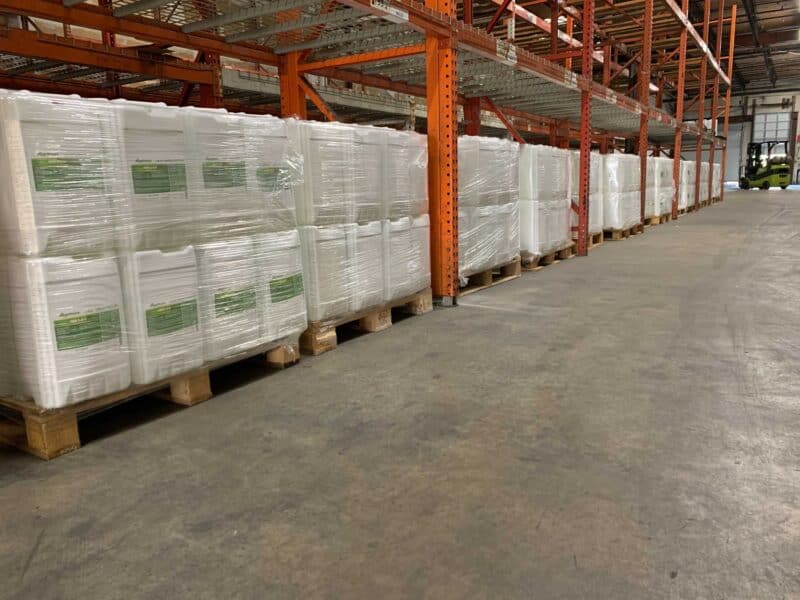
They started by sending a single container of palletized 25-liter jugs into the U.S. as sample product to begin landing customers.
Once those samples started turning into real orders, they needed the ability to fulfill and store larger quantities.
If they couldn’t get product where it needed to go, when it needed to get there, they were going to lose customers.
That’s the reality with farm deliveries. Timing matters.
They needed a partner who could:
- Receive containers coming from Europe through Savannah and routed to Tampa
- Store bulk product in a simple, scalable way
- Turn around outbound orders quickly (usually within 24 hours)
- Coordinate trucking across the U.S.
- Communicate directly with receivers
- Handle issues without delays or constant back-and-forth
Most importantly, they needed someone who could handle all of this without needing to be managed day-to-day.
We received their first container in November 2021 and handled storage and outbound shipments as orders started coming in.
As their business grew, the operation changed and we adjusted with it.
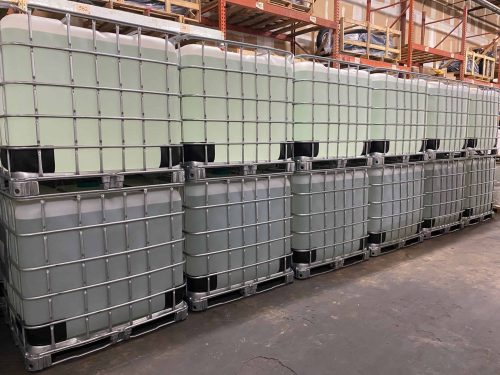
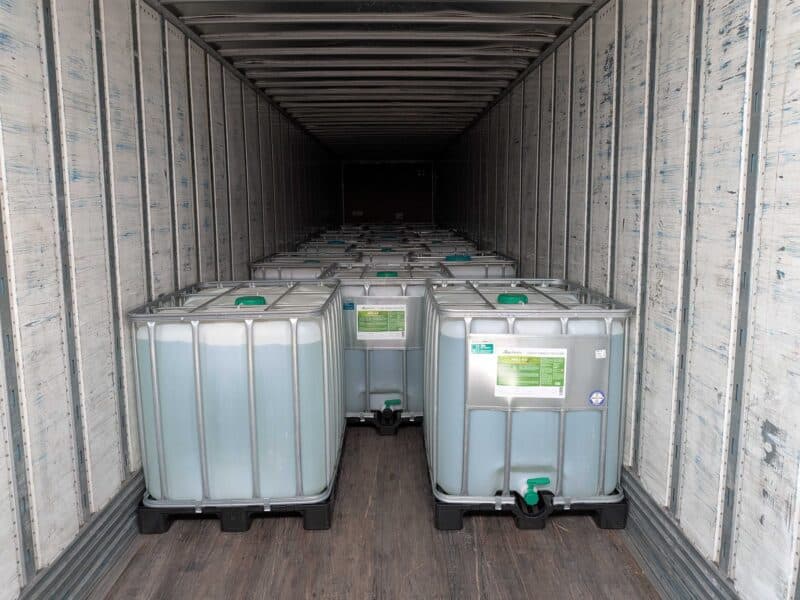
They moved from palletized sample product to bulk shipments in 1,000-liter IBC totes. What started as one SKU eventually expanded into five SKUs.
Today, we:
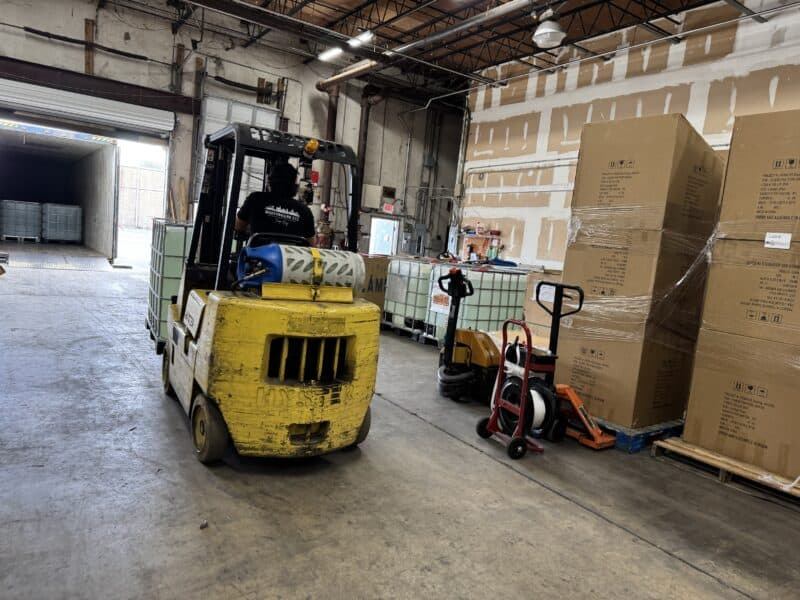
- Receive containers moving from Europe → Savannah → rail to Tampa → final delivery to our Tampa warehouse
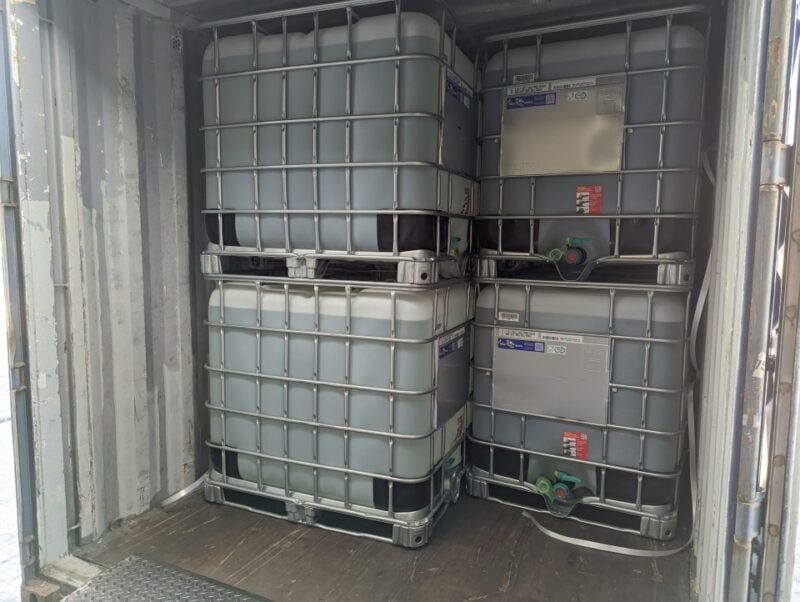
- Store IBC totes stacked 3 high to keep storage efficient
- Carry anywhere from 1 to 6 containers of inventory depending on demand
- Turn around most outbound shipments within 24 hours
- Coordinate full truckload shipments across the U.S.
- Typically 16 IBCs per 53’ dry van due to weight limits
- Occasionally ship smaller quantities via LTL or expedite when needed
From the client’s side, it’s straightforward.
They send an email with:
- Destination
- SKUs and quantities
- Timing requirements
We take it from there.
We:
- Quote trucking the same day
- Book the shipment (typically next day or based on receiver availability)
- Create the BOL
- Coordinate delivery directly with the receiver
- Handle any issues that come up along the way
What started as one container of sample product turned into a steady U.S. distribution operation.
- Working together since November 2021 through present day
- Expanded from 1 SKU to 5 SKUs
- Dozens of shipments coordinated across the U.S.
- Inventory levels flex between 1–6 containers depending on demand
- Most outbound orders ship within 24 hours
The client handles sales and imports.
We handle everything from the time the product hits our warehouse to when it gets delivered to their customer.
This has worked long-term because the process is simple and reliable.
- We respond quickly
- We execute without needing constant direction
- We communicate directly with receivers
- We adjust when things don’t go exactly as planned
Over time, the client has had different people involved on their side.
On our side, the process has stayed consistent.
If you’re bringing product into the U.S. and selling to customers who depend on timely delivery, you need a system in place to store and ship that product reliably.
You don’t necessarily need to build that system internally.
You need a partner who can handle it for you.