




Warehouse Technology Is About More Than Automation
Warehousing has changed significantly over the past decade. What was once largely dependent on paper records, manual inventory counts, and spreadsheets has evolved into an industry where software, data, automation, and connected systems help businesses move freight more efficiently.
Today, warehouses can use technology to track inventory, coordinate receiving and shipping, monitor product movement, automate repetitive tasks, and give customers better visibility into their supply chains.
But not every warehouse needs the same technology. A distribution center shipping thousands of individual orders each day has different requirements than a warehouse unloading import containers, transloading freight, or storing pallets for several months.
For businesses looking for a third-party logistics provider (3PL), the important question isn’t simply whether a warehouse uses advanced technology. It’s whether that technology supports the specific services, inventory, and supply chain challenges your business needs to manage.
Understanding the available warehouse technologies can help you ask better questions, evaluate potential partners, and choose a warehouse that can support your operations today and as your business grows.
1. Warehouse Management Systems (WMS)
One of the most important technologies in modern warehousing is the warehouse management system, commonly known as a WMS.
A WMS is software designed to manage and coordinate warehouse activities, from receiving incoming shipments to storing inventory, fulfilling orders, and shipping products. Depending on the system, it can provide inventory visibility, track product movements, record transactions, and help warehouse employees complete tasks accurately.
Instead of relying entirely on manual records, a warehouse can use a WMS to maintain organized information about what it has received, where inventory is located, and what has been shipped.
Why Does a WMS Matter?
A well-suited warehouse management system can help businesses:
- Improve inventory accuracy: Maintain more reliable records of inventory quantities and locations.
- Track incoming and outgoing freight: Record receipts, inventory movements, and shipments.
- Reduce manual errors: Use standardized processes and electronic records instead of relying entirely on handwritten notes or repeated data entry.
- Improve order fulfillment: Help coordinate picking, packing, staging, and shipping activities.
- Support reporting: Make inventory information and transaction records easier to review.
For businesses that store products over an extended period, inventory visibility can be especially important. Knowing how much product is available and where it is located helps with replenishment, order planning, and customer commitments.
For companies that primarily need container unloading, transloading, or short-term storage, the priorities may be different. They may need reliable receiving records, accurate pallet counts, shipment documentation, and clear confirmation that freight has been processed.
The right system should support the actual work being performed rather than simply offer an impressive list of features.
2. Barcode Scanning and RFID Technology
Knowing what is in a warehouse is important, but knowing that the information is accurate is just as critical.
Barcode scanning and radio-frequency identification (RFID) are two technologies warehouses can use to identify products, pallets, and other inventory as they move through a facility.
Barcode Scanning
Barcodes are widely used in warehouse operations because they provide a practical way to identify products and record inventory transactions.
Warehouse employees can scan a barcode when receiving merchandise, moving inventory, picking an order, or preparing a shipment. When connected to the appropriate software, the scan updates the associated inventory record.
This helps reduce the need for manual data entry and creates a more consistent record of inventory activity.
Barcode scanning can be particularly useful for warehouses handling multiple products, SKUs, customer orders, or shipments that require verification before leaving the facility.
RFID Technology
RFID uses radio waves to identify tagged items. Unlike conventional barcode scanning, RFID can read compatible tags without requiring a direct line of sight, and some systems can identify multiple tagged items within a reader’s range.
Depending on the application, RFID can help warehouses monitor inventory movement, speed up identification processes, and improve visibility across certain operations.
However, RFID isn’t necessary for every warehouse. Tag costs, equipment requirements, product characteristics, and the complexity of the operation all influence whether it makes sense.
Why Should Customers Care?
The goal of these technologies is not simply to scan more items. It’s to make inventory records more dependable.
When evaluating a warehouse partner, ask how it identifies and tracks your products, how inventory movements are recorded, and what procedures are used to investigate discrepancies.
A warehouse with an appropriate tracking process can provide greater confidence that the inventory information you receive reflects what is actually happening on the warehouse floor.
3. Real-Time Inventory Visibility and Customer Reporting
Inventory visibility has become an important consideration for businesses managing complex supply chains.
Companies need to know whether products have arrived, how much inventory is available, whether an order has been processed, and when freight is ready to move.
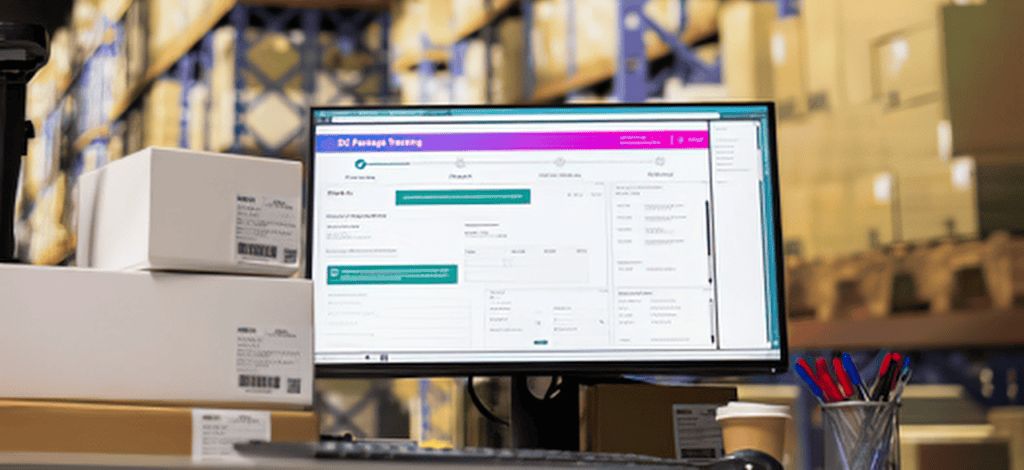
Warehouse technology can help provide this information through inventory dashboards, reporting tools, customer portals, and system integrations.
Depending on the warehouse’s capabilities, customers may be able to review inventory balances, check receiving records, access transaction histories, and monitor order status without requesting every update manually.
How Inventory Visibility Helps Your Business
Better visibility can support several important business decisions:
Planning incoming shipments: Knowing what inventory is already on hand helps businesses coordinate new deliveries and avoid unnecessary congestion.
Managing available stock: Accurate inventory information helps purchasing and operations teams make better decisions about replenishment and product availability.
Coordinating outbound freight: Shipment status and warehouse processing information can help businesses coordinate pickups, deliveries, and customer commitments.
Resolving discrepancies: Accessible transaction records can make it easier to investigate differences between expected and actual inventory.
Communicating with customers: Businesses can provide more informed updates when they have reliable information about their own inventory and shipments.
However, real-time visibility doesn’t automatically mean every warehouse transaction is updated instantaneously. The quality of the information depends on the systems involved, how frequently data is recorded, and whether the warehouse follows consistent procedures.
When choosing a 3PL, ask what information is available to customers, how often it is updated, and how you can obtain records when questions arise.
4. Warehouse Automation and Robotics
Automation is another major area of warehouse technology. Some facilities use automated equipment to move, store, retrieve, sort, or process products with less manual intervention.
The available options range from relatively simple conveyor systems to sophisticated robotics and automated storage and retrieval systems.
Common Types of Warehouse Automation
Conveyor systems: Move cartons, packages, or other suitable materials between work areas, reducing the need to transport every item manually.
Automated storage and retrieval systems (AS/RS): Use automated equipment to store and retrieve inventory in designated storage locations. These systems can be useful in operations with specific storage-density and throughput requirements.
Autonomous mobile robots (AMRs): Move materials around a warehouse and can assist with tasks such as transporting picked products or supporting employee workflows.
Pick-to-light and voice-directed picking: Guide employees through picking tasks using visual indicators or spoken instructions, depending on the system.
Automated sorting systems: Direct compatible packages or products toward designated destinations, helping manage high-volume distribution operations.
Is an Automated Warehouse Always Better?
Not necessarily.
Automation can improve throughput, reduce repetitive work, and support consistency in operations with predictable, high-volume workflows. However, it also involves equipment costs, maintenance, integration requirements, and operational constraints.
A highly automated fulfillment center may be an excellent fit for a business shipping thousands of small packages. That same facility may not be the best choice for a company that needs irregularly sized freight unloaded from shipping containers, pallets restacked, damaged loads reworked, or products prepared for immediate pickup.
In those situations, equipment availability, experienced warehouse personnel, flexible processes, and the ability to respond to unexpected freight problems may matter more than robotics.
The best warehouse is not necessarily the one with the most automation. It’s the one with the right combination of technology, equipment, people, and processes for your freight.
5. Artificial Intelligence, Data Analytics, and Predictive Planning
Artificial intelligence (AI) and data analytics are creating additional opportunities for warehouses to improve how they plan and manage operations.
These technologies can analyze operational data, identify patterns, and help warehouse managers make more informed decisions. Their effectiveness depends on the quality of the data available and how the tools are integrated into daily workflows.
Potential applications include:
- Demand forecasting: Analyzing historical order patterns to help anticipate future inventory requirements.
- Inventory optimization: Identifying trends that may help businesses manage stock levels and storage requirements.
- Labor planning: Estimating workload fluctuations to help schedule employees and allocate resources.
- Storage optimization: Recommending product locations based on movement patterns, order frequency, or operational requirements.
- Exception identification: Highlighting unusual inventory movements, processing delays, or discrepancies that may require investigation.
For example, a warehouse supporting a seasonal business may use historical data to anticipate periods of increased storage demand. That information can help the business plan incoming shipments and evaluate whether additional space or handling capacity will be necessary.
AI can also support operational decision-making, but it should not be treated as a replacement for accurate inventory records, sound warehouse procedures, or experienced personnel.
When evaluating a technology-enabled warehouse, focus on the practical problems its systems help solve rather than the use of AI as a marketing term.
6. System Integration: Connecting the Warehouse to Your Business
Warehouse technology becomes more valuable when the systems involved can communicate with one another.
Many companies already use enterprise resource planning (ERP) software, inventory platforms, order management systems, transportation management systems (TMS), or e-commerce platforms.
If a warehouse can integrate with the systems a customer already uses, information may be transferred more efficiently between the business and its logistics provider.
For example, an integration might transmit an incoming shipment notification to the warehouse, communicate order details, or send inventory updates back to the customer’s business system.
Without suitable integration, employees may have to enter the same information into multiple systems, increasing administrative work and creating opportunities for discrepancies.

What Should You Ask About Integration?
Before selecting a warehouse, consider these questions:
- Can the warehouse exchange data with the systems your business currently uses?
- Does it support electronic data interchange (EDI), APIs, file transfers, or other relevant integration methods?
- Can receiving confirmations and inventory reports be provided in a format your team can use?
- Are there additional setup costs or ongoing integration fees?
- What happens if an integration fails or information doesn’t transfer correctly?
Not every business needs a complicated, fully integrated technology environment. A smaller company using straightforward inventory records may be well served by a simpler arrangement.
The important thing is to understand how information will move between your company and the warehouse, and whether that process will be dependable and manageable.
7. Why Different Warehousing Needs Require Different Technology
One of the biggest mistakes a business can make when selecting a warehouse is assuming that every 3PL operates the same way.
Warehouse technology is often designed around particular workflows. The right solution depends on the type of freight you handle, how frequently inventory moves, how orders are processed, and what information you need to access.
Consider how the priorities can differ across these operations.
Long-Term Storage and Inventory Management
Businesses storing inventory for weeks or months may prioritize inventory accuracy, location tracking, reporting, and visibility into available stock.
A suitable WMS can help manage receipts, inventory movements, cycle counts, and outbound orders over time.
E-commerce Fulfillment
A business shipping individual orders directly to consumers may need software that integrates with online storefronts, manages large numbers of SKUs, supports order picking, generates shipping labels, and communicates tracking information.
Picking strategies and automation may become increasingly important as order volumes grow.
Container Unloading and Transloading
Businesses moving imported freight through Port Tampa Bay may have different priorities.
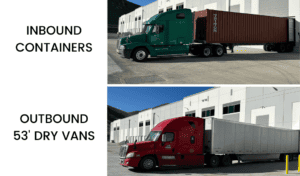
They may need a warehouse capable of coordinating container arrivals, unloading cargo, counting pallets, documenting receipts, staging freight, and transferring products to outbound trucks or trailers.
Technology can support scheduling, receiving records, freight identification, and shipment documentation. However, the warehouse must also have the labor, dock capacity, equipment, and operational flexibility to handle the actual freight.
Pallet Restacking and Load Rework
When a shipment arrives with damaged, leaning, unstable, or rejected pallets, the immediate requirement may be to correct the problem and get the freight moving again.
In this situation, warehouse technology can help record the job, identify the affected freight, document quantities, and maintain a record of completed work.
But software alone cannot restack a pallet or resolve a physical freight problem. The warehouse also needs the right equipment, trained personnel, and a practical process for handling the situation.
Seasonal or Short-Term Storage
Businesses that experience temporary inventory surges may need a warehouse that can accommodate changing storage requirements without committing to a long-term arrangement.
Here, useful technology may include accurate inventory records, receiving and release documentation, and reporting that helps the customer understand what is stored and when it can be released.
These examples illustrate an important point: warehouse technology should be evaluated in the context of the service you need, not in isolation.
8. How to Choose a Warehouse with the Right Technology
When comparing third-party logistics providers, it helps to look beyond general claims about being modern, automated, or technology-driven.
Instead, evaluate how each warehouse’s systems support your real operation.
Use the following checklist when speaking with potential warehouse partners.
Warehouse Technology Evaluation Checklist
Inventory tracking: How does the warehouse record incoming freight, inventory movements, and outgoing shipments?
Inventory accuracy: What processes are used to verify quantities and investigate discrepancies?
Customer visibility: What inventory information, transaction records, and shipment updates can customers access?
Reporting: Can the warehouse provide reports that match your operational requirements?
System compatibility: Can its systems exchange information with the software your business already uses?
Handling capabilities: Does the warehouse have the equipment, space, and personnel required for your specific freight?
Flexibility: Can the warehouse accommodate unusual shipments, changing volumes, urgent requests, or nonstandard handling requirements?
Scalability: Can its technology and processes support your business if your inventory or shipping volume increases?
Exception management: How are damaged freight, inventory discrepancies, rejected shipments, and unexpected delays documented and communicated?
Support and communication: Who can answer questions about your inventory, and how are problems escalated?
You do not need to select a warehouse that offers every available technology. You need a provider that can demonstrate how its systems and operating procedures will support your requirements.
It is also worth asking for a walkthrough of a typical transaction, from receiving freight through storage and eventual release. Seeing how the warehouse records and communicates that process can tell you more than a general presentation about its technology.
9. Technology Matters, but the Warehouse Team Matters Too
Even the most sophisticated warehouse management system cannot compensate for every operational weakness.
Technology depends on accurate information, consistent procedures, trained employees, and clear communication. If a warehouse fails to record transactions properly or does not have a reliable process for addressing exceptions, its software may simply make inaccurate information easier to access.
Likewise, automation is only useful when it supports the work that actually needs to be done.
When choosing a 3PL, evaluate the entire operation:
- Does the warehouse understand your freight and business requirements?
- Are receiving, storage, and shipping procedures clearly defined?
- Can the team accommodate your handling requirements?
- Are inventory discrepancies investigated and resolved?
- Can you get a clear answer when an unexpected problem occurs?
- Does the warehouse have the flexibility to respond when your original plan changes?
The strongest warehouse partnerships combine appropriate technology with capable people and dependable processes.
For businesses with complex or time-sensitive freight requirements, that combination can be particularly important.
Conclusion: Choose Warehouse Technology That Works for Your Business
Warehouse technology continues to evolve, offering businesses new ways to improve inventory visibility, streamline operations, and coordinate their supply chains.
From warehouse management systems and barcode scanning to robotics, analytics, and system integration, the right tools can make a meaningful difference when they are matched to the right operational needs.
However, choosing a warehouse should never come down to technology alone.
Before selecting a 3PL, consider the type of freight you handle, the services you require, the information you need to access, and the problems you need your warehouse partner to solve. Then evaluate whether its technology, equipment, personnel, and procedures can deliver the support your business needs.
For companies moving freight through Tampa and Port Tampa Bay, the right warehouse partner should understand both the importance of accurate information and the realities of handling freight on the warehouse floor.
At Warehousing Etc, we understand that businesses need warehousing solutions that fit their operations. Whether you need container unloading, transloading, short-term storage, pallet restacking, or ongoing warehousing support, choosing a provider that understands your freight requirements is an important step toward keeping your supply chain moving.
Looking for warehousing services in Tampa, Florida? Contact Warehousing Etc to discuss your freight, storage, and handling requirements and find a solution that fits your business.
Frequently Asked Questions About Warehouse Technology
Warehouse technology includes the software, equipment, and digital tools used to manage inventory, coordinate warehouse activities, track freight, process orders, and improve operational efficiency. Examples include warehouse management systems, barcode scanners, RFID, automated material-handling equipment, and inventory reporting tools.
A warehouse management system is software that helps coordinate warehouse operations, including receiving, storage, inventory tracking, picking, and shipping. Depending on its capabilities, it can improve inventory visibility, standardize processes, and provide records of warehouse transactions.
No. Automation can be beneficial for certain high-volume or repetitive operations, but it is not necessary for every warehouse. The best technology depends on the type of freight, the volume of work, the required turnaround time, and the services being performed.
Inventory visibility helps businesses understand what products are in storage, how inventory is moving, and whether shipments have been processed. Reliable records and accessible reporting can improve planning, support customer communication, and help resolve discrepancies.
Ask how it tracks inventory, records receiving and shipping transactions, provides customer reports, integrates with your existing systems, and documents exceptions. Also verify that it has the equipment and personnel required to handle your freight.
No. Newer technology can offer advantages, but its value depends on how well it supports the operation. A warehouse with appropriate systems, experienced personnel, reliable processes, and the right handling capabilities may be a better fit than a more automated facility that does not specialize in your needs.


