


 We were contacted by an established European furniture brand that had just fulfilled a new purchase order with Rooms To Go. This was their first purchase order with Rooms To Go, so everything about this shipment mattered.
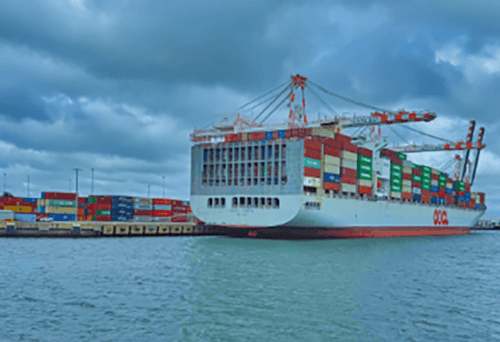
The product was imported through the Port of Tampa and delivered as eight ocean containers to Rooms To Go’s Central Florida distribution center.
During routine quality control checks, Rooms To Go staff opened a small number of cartons.
That is when issues were identified that stopped the shipment from moving forward.
 Here is what happened next.
The product required fumigation in the United States before it could be accepted.
In addition, some wood frame components showed mold, which meant the product could not simply be fumigated and delivered back to Rooms To Go.
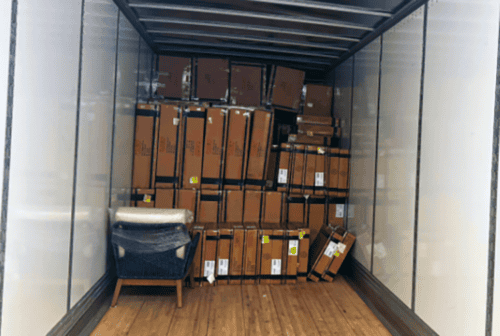
Every carton needed to be opened, inspected, cleaned, dried, and repackaged before it could go back to the retailer.
At that point, every container and every carton in the shipment was impacted.
This was no longer a small fix.
 Now, if you are the importer in this situation, your options are limited.
In this case, the client had two real choices.
They could ship all eight containers back to Asia, and delay or cancel the Purchase Order with the receiver.
Or they could find a warehouse partner in the United States that was capable of handling detailed, carton level remediation under tight timelines.
This situation was especially stressful for the owner of the inventory for three reasons.
 First, this was the client’s first order with a major United States retailer.
Second, the entire client team was based in Europe, with no one local to oversee the work in Florida.
And third, the scale of the shipment meant any mistakes would be costly and very visible. This was eight containers to rework, not just one or two.
The client needed a partner they could trust to handle the details correctly. This is where Warehousing Etc became involved.
We worked alongside the client and their partners to handle the United States based execution. Let me walk you through how this was handled step by step.
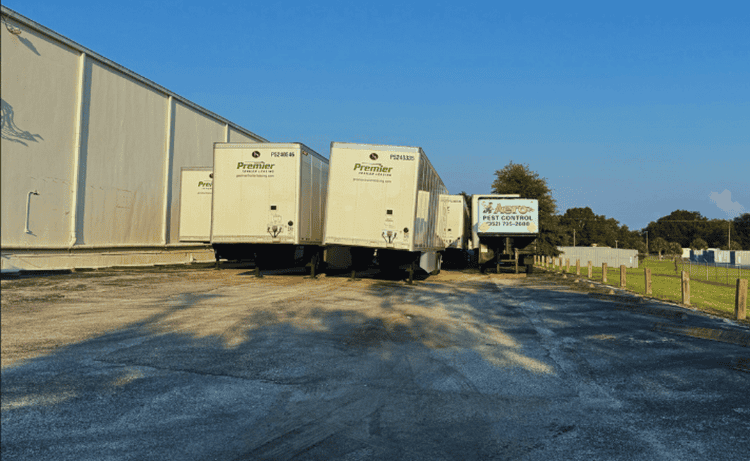
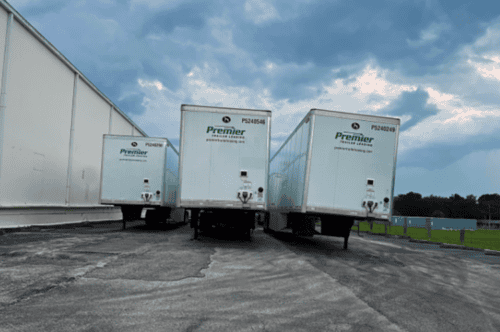
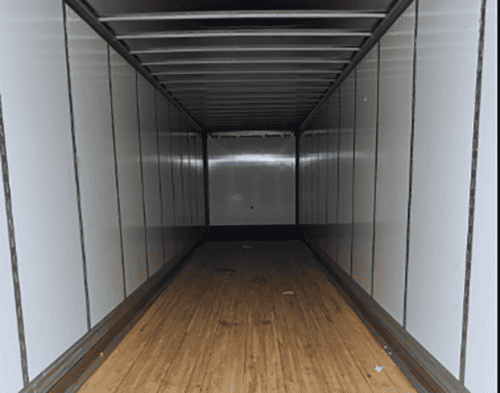
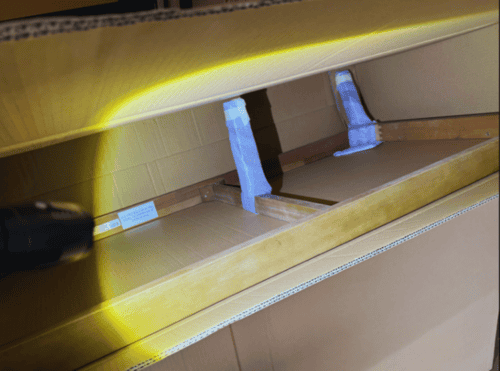 First, we coordinated recovery of the freight from the Rooms To Go Lakeland facility. Because the product had already been unloaded, the freight was picked up using six separate fifty three foot dry vans and transported to our Tampa warehouse.
Next, we provided yard storage while third party fumigation was completed. The client coordinated the fumigation service directly, and our role was to make sure the freight was staged, protected, and ready for warehouse work as soon as fumigation was complete.
Once fumigation and the required waiting period were finished, the warehouse work began.
At that point, our team unloaded all the inbound trailers.
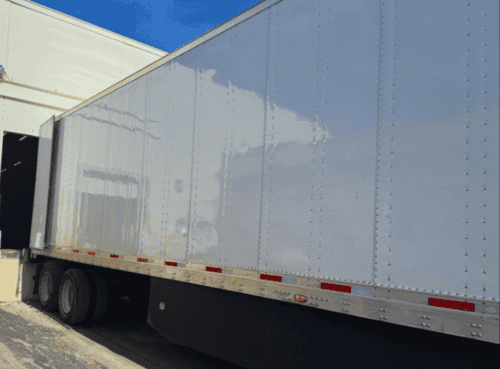 Every single carton was opened. Each carton was inspected. All affected wood components were cleaned and treated.
Time was allowed for proper drying. The cartons were then repackaged and resealed to like new condition.
Once complete, the freight was prepared for return delivery to Rooms To Go.
The entire project was completed in under two weeks, based on the retailer’s and fumigation company’s scheduling availability. This included the fumigation, inspection, rework, and redelivery to the retailer.
 Now let’s talk about the result.
After inspection and remediation were complete, the freight was delivered back to Rooms To Go. The shipment was fully accepted.
The client avoided a costly overseas return. The inventory was saved. And most importantly, a critical new retail relationship was preserved.
 Here is the key takeaway.
Situations like this are not solved by standard warehousing. They require hands on inspection, careful coordination, clear communication, and a team that is comfortable managing high pressure projects. That is the type of work Warehousing Etc specializes in.
If you have a shipment that has been flagged, rejected, or requires specialized handling in the Tampa or Central Florida market, reach out to Warehousing Etc using the link in the description. We help importers solve complex warehouse problems before they become expensive disasters.


